
Local News
Komani Hosts Acting Premier Zolile Williams for Reconciliation Dialogue

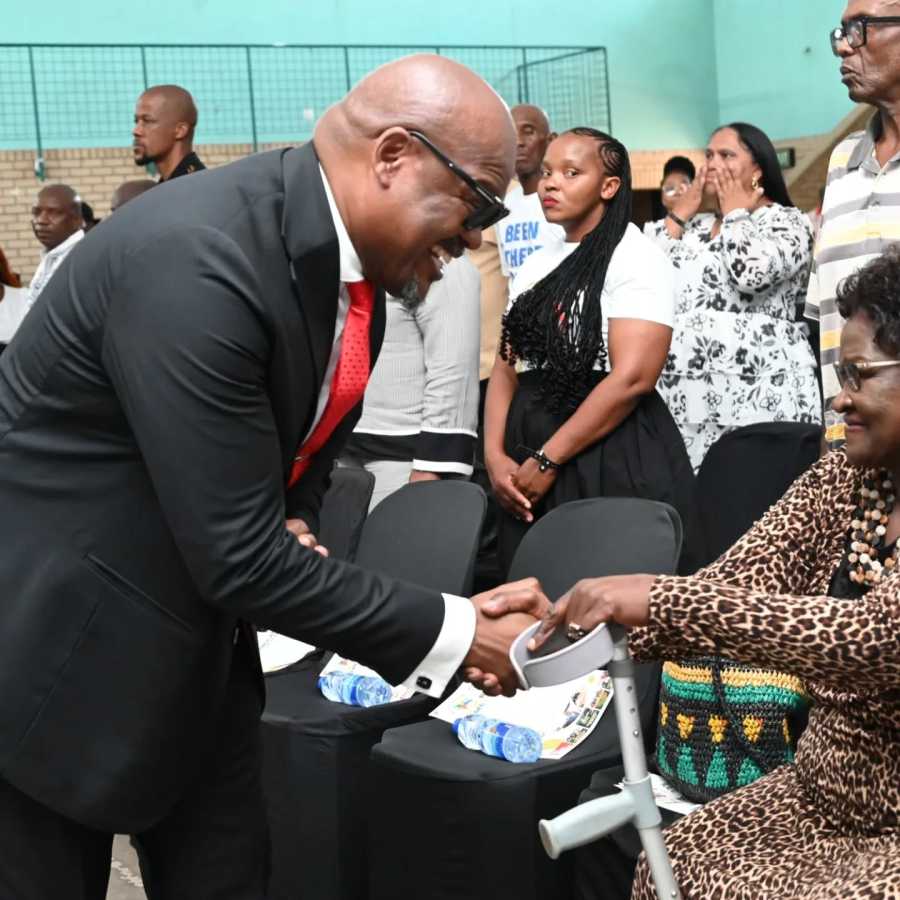
Komani took centre stage in South Africa’s ongoing journey of healing and unity on Tuesday as Acting Eastern Cape Premier Zolile Williams delivered a reflective and action-driven address during the Day of Reconciliation Social Dialogue.
The event, held in the heart of the Eastern Cape, brought together community members, faith leaders, heritage practitioners and civil society representatives, placing Komani at the forefront of national conversations about reconciliation, remembrance and restorative justice.
The Day of Reconciliation, commemorated annually on 16 December, was observed not merely as a symbolic occasion, but as a platform for meaningful engagement, honest reflection and forward-looking commitments aimed at building a united and inclusive society.
Reconciliation Described as a Continuous Commitment
In his keynote address, Acting Premier Williams emphasised that reconciliation must be understood as an ongoing national responsibility rather than a once-off historical milestone.
He stressed that true reconciliation is rooted in truth, justice, dignity and the principle of Ubuntu, calling on South Africans to confront the realities of the past while actively shaping a shared future.
“Reconciliation means facing the truth, restoring dignity, and building a future where no community is left behind,” Williams said during his address.
He further highlighted that reconciliation requires consistent effort, accountability and compassion, especially towards communities that have historically borne the brunt of violence and marginalisation.
Honouring Victims of Eastern Cape Massacres
A central focus of the address was the acknowledgment of the painful history of violence in the Eastern Cape. Acting Premier Williams paid tribute to those who lost their lives in the 12 recorded massacres across the province, spanning from Bulhoek to Northcrest.
He underscored the importance of remembrance as a necessary step towards healing, stating that honouring the memory of victims ensures that their sacrifices are not forgotten and that the mistakes of the past are not repeated.
The Acting Premier also highlighted the need for balanced recognition, noting that some massacre-affected communities have historically received less attention and support than others.
According to Williams, acknowledging every affected community equally is essential for achieving meaningful reconciliation and social cohesion.
Call for Equal Recognition and Support
During the dialogue, the Acting Premier stressed the importance of listening to survivors and families of victims, describing their voices as central to shaping a fair and inclusive reconciliation process.
He acknowledged that while progress has been made since the advent of democracy, gaps remain in how massacre-affected communities are supported, particularly in rural and historically neglected areas.
Williams called for targeted interventions that prioritise psychosocial support, memorialisation initiatives and sustainable development in these communities, ensuring that remembrance is accompanied by tangible improvement in people’s lives.
Proposal for Provincial Massacre Forum
One of the key outcomes proposed during the address was the establishment of a Provincial Massacre Forum.
The forum, according to Williams, would serve as a coordinating body to strengthen advocacy, improve intergovernmental collaboration and ensure long-term support for massacre-affected communities across the Eastern Cape.
The proposed structure aims to bring together government, civil society, heritage institutions and community representatives to address historical injustices in a coordinated and transparent manner.
“We must turn our painful history into a foundation for unity, justice and shared prosperity,” Williams said.
Reconciliation in Action Across Komani
The Day of Reconciliation programme in Komani extended beyond formal speeches, reflecting reconciliation in action through visible and inclusive activities.
The event included a Peace Walk through Mlungisi Township, symbolising unity and collective commitment to healing. The walk was followed by social dialogue sessions that allowed community members to engage directly with leaders and stakeholders.
Discussions focused on heritage preservation, intergenerational healing and the role of local communities in shaping reconciliation processes that are people-centred and sustainable.
Faith leaders and heritage practitioners also played a prominent role, reinforcing the importance of cultural memory, spiritual healing and moral leadership in building social cohesion.
Local Significance for Komani
Hosting the provincial reconciliation dialogue reinforced Komani’s growing role as a space for meaningful civic engagement and historical reflection within the Eastern Cape.
The event provided residents with an opportunity to participate directly in national conversations about justice, unity and remembrance, while also highlighting local histories and experiences that form part of South Africa’s broader narrative.
Community members welcomed the focus on dialogue, describing it as an important step towards ensuring that reconciliation efforts reach grassroots level and do not remain confined to symbolic gestures.
Looking Ahead
As South Africa continues to grapple with the legacy of its past, the Day of Reconciliation Social Dialogue in Komani highlighted the importance of sustained engagement, honest reflection and concrete action.
The commitments articulated by Acting Premier Williams, particularly around equal recognition, survivor support and institutional coordination, signal an intention to move reconciliation from rhetoric to practice.
For many in attendance, the message was clear: reconciliation is not confined to history books or annual commemorations, but must be lived daily through inclusive policies, community dialogue and shared responsibility.
