One year later, cows still roam Komani roads as other crashes continue
A year on, the danger remains unchanged
One year after surviving a near-fatal collision with a cow on a road just 10 kilometres outside Komani, Komani News writer Henry van Staden says little has changed — and the danger posed by roaming livestock on local roads continues to put lives at risk.
On 2 January 2026, almost exactly one year after his own crash, another motorist struck a cow in nearly the same area. Fortunately, no one was seriously injured in that incident. But for Van Staden, the timing and location served as a painful reminder that the problem remains unresolved.
“How many more accidents need to happen before something is done?” he asks.
The night that nearly ended in tragedy
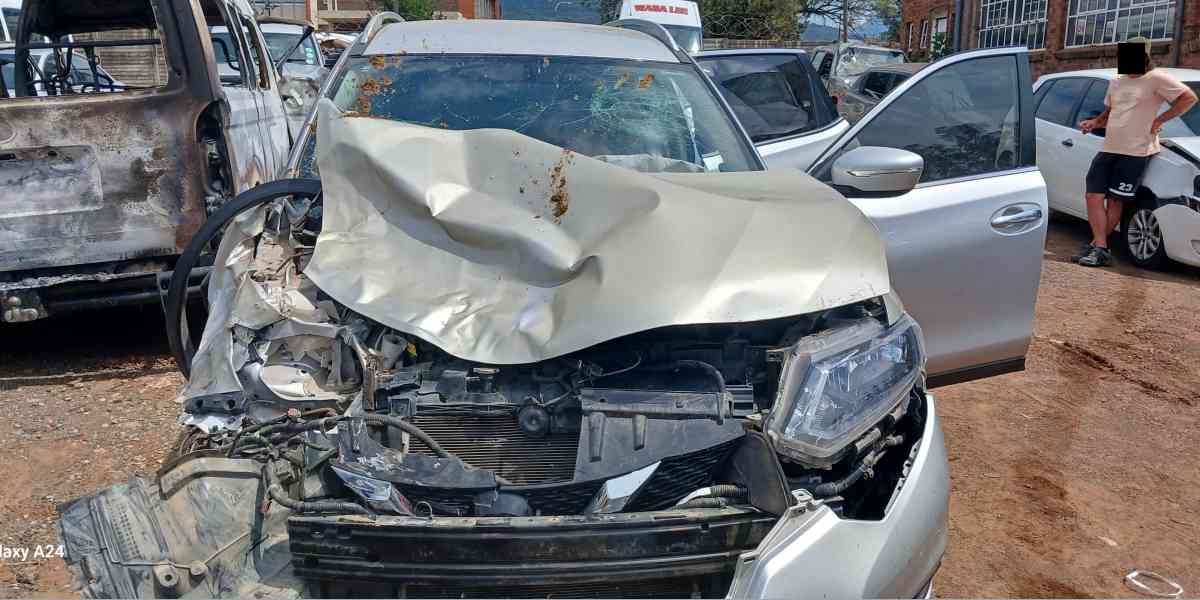
Van Staden’s crash occurred at approximately 20:58 on 3 January 2025. He was travelling with his wife Nicolette, his son, his daughter and her boyfriend when the vehicle collided with a cow on a dark stretch of road outside Komani.
As he approached a bend, an oncoming vehicle caused him to dim his headlights. When he switched back to full beam, a cow appeared directly in front of the vehicle — no more than two metres away — leaving no time to brake or swerve.
The impact was severe.
The cow was flung to the right side of the road, striking the rear door of the vehicle before landing approximately 20 metres off the roadway. Airbags deployed instantly, striking Van Staden in the face and arm.
“The first thing I did was check my son behind me, then the rest of my family,” he recalls. “We were alive. That was all that mattered.”
Smoke, panic and quick intervention
Moments after the collision, smoke from the deployed airbags filled the vehicle’s cabin. Fearing a fire, the family exited the car and stood on the side of the road near the wreck.
A man believed to be associated with traffic services stopped to assist, helping to control traffic and check that everyone was safe. His identity remains unknown.
Family members were alerted, recovery services were arranged, and Emergency Medical Services (EMS) later arrived to assess all occupants.
Van Staden was taken back into town and admitted to hospital overnight for observation after suffering facial pain caused by the airbag impact.
The emotional scars do not fade
While no lives were lost, Van Staden says the emotional impact of the crash has stayed with him.
“That moment doesn’t leave you. You replay it over and over — especially when you realise how easily your family could have died.”
He remembers letting out a loud, involuntary scream immediately after the impact — something his family later told him they had never heard before.
“I think it was pure shock,” he says.
Another crash, same problem
Exactly one year later, on 2 January 2026, another motorist struck a cow in almost the same area outside Komani. Once again, lives were spared — but the crash reinforced the ongoing danger.
“This is not coincidence,” Van Staden says. “This is a known problem that keeps repeating itself.”
According to Komani News reporting, livestock-related crashes continue to occur across the Eastern Cape, particularly on rural and semi-rural routes.
A preventable danger
Van Staden believes these crashes are not unavoidable accidents but predictable outcomes of inaction.
“Cows, horses and other livestock should not be roaming on roads where vehicles travel at speed, especially at night,” he says. “This is not about blaming drivers. It’s about preventing loss of life.”
He questions why responsibility for livestock control and enforcement continues to fall through the cracks.
“What must be done to stop this? Who is responsible? And how many more people must crash before it is treated as the serious threat that it is?”
A warning and a call for action
As the anniversary of his crash passes, Van Staden says he remains grateful that his family survived — but deeply concerned for others who travel the same roads.
“We thank God that it was not our time,” he says. “But every time another accident happens, it reminds me that someone else may not be as lucky.”
Motorists travelling in and around Komani, particularly at night, are urged to reduce speed and remain alert for animals on the roadway.
Until effective measures are put in place to keep livestock off public roads, the risk remains — and the question lingers: how many more near-misses will it take before lives are lost?