Local News
Komani’s R9m Vegetable Project Failed Before Producing Anything

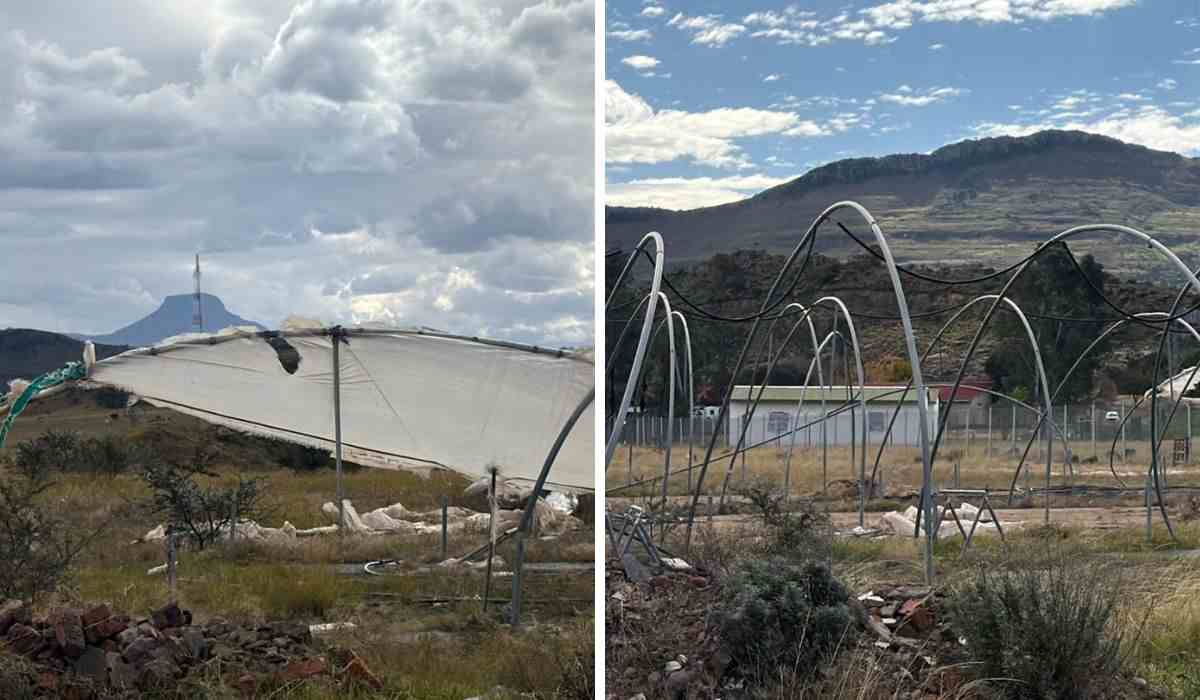
A R9-million government-funded vegetable incubation project meant to uplift hundreds of needy families in Komani and surrounding areas has collapsed before producing a single seedling, leaving cooperatives with infrastructure they cannot use and no income to show for years of promises.
The initiative, launched in July 2016 by Small Business Development Minister Lindiwe Zulu, was designed as an integrated agri-business value chain.
A nursery in Ezibeleni would grow spinach and tomato seedlings for primary production sites in Cala and Braakloof near Whittlesea.
From there, vegetables would go to a packing house for distribution to markets and retail stores.
None of it materialised.
In 2017, Abongile Hala, former executive director of the Chris Hani Cooperative Development Centre (CDC) in an interview with Daily Dispatch said the nursery cannot make money because it is not selling and the primary production sites have no seedlings to plant and sell.
Hala said the failure comes down to basic services.
The nursery requires water and electricity to operate, but neither was supplied. The Chris Hani District Municipality (CHDM) was responsible for providing water to the Ezibeleni site, while Eskom was meant to install electrical connections. Without both, the R1-million nursery sits idle.
The Cala and Braakloof production centres, each built at a cost of R4-million, are similarly stuck. ECDC and Sefa funded the Cala site, Sefa funded Braakloof, and the Department of Small Business Development (DSBD) funded the nursery.
The Department of Economic Development, Environmental Affairs and Tourism was also listed as a funder.
“The failure of one of these to operate affects the entire value chain,” Hala said.
The project also included a training component through the CDC to equip cooperatives with business and technical skills.
CHDM had funded renovations to the building housing the CDC, with the aim of creating an integrated site. Hala said the centre’s database holds more than 2,000 cooperatives.
“The aim of this approach to the development of cooperatives is to ensure maximum participation in the value chain for the previously disadvantaged,” he said.
Eight years after the launch, the site remains non-operational.
Cooperatives that were meant to benefit have no seedlings, no contracts, and no market access.
Questions sent to CHDM spokeswoman Sandiso Tyembile went unanswered.
The collapse raises fresh questions about inter-governmental coordination and oversight of public-funded projects in the Eastern Cape.
Funding was split across ECDC, Sefa, DSBD, and provincial departments, but no single entity appears to have taken responsibility for ensuring the basic utilities were in place before launch.
For families in Komani and surrounding areas, the outcome is the same as before 2016: no jobs, no income, and no vegetables grown.
Hala promised to respond to Komani News questions last week but never did.