Origins and Founding (1853–1855)
Komani, known as Queenstown until its renaming in 2016, was founded in 1853 by Sir George Cathcart, then Governor of the Cape Colony. The town emerged directly out of the Cape Frontier Wars — a series of nine conflicts fought between the British and Dutch settlers on one side and the Xhosa people on the other, spanning almost a century (1779–1879). These wars were among the longest-running conflicts in South African history, driven by competition over land, cattle, and political control.

Strategic Purpose
Cathcart’s decision to establish Queenstown was not incidental. At the time, the eastern frontier of the Cape Colony was volatile, with frequent clashes between colonial settlers and the Xhosa communities who resisted displacement. The new town was intended as a military outpost, a bulwark of colonial authority, and a base from which to protect British settlers and consolidate colonial expansion in the region.
Naming and Symbolism
The town was named Queenstown in honor of Queen Victoria, the reigning British monarch. This was part of a wider colonial practice of asserting imperial power and allegiance by naming towns, forts, and settlements after members of the British royal family. For settlers, the name symbolized loyalty to the Crown; for local Africans, it was a marker of the encroaching colonial presence.

Municipal Recognition
By 1855, just two years after its founding, Queenstown had already grown in importance as a frontier settlement. The town was officially granted municipal status, which provided it with a degree of self-governance and administrative autonomy under colonial law. This recognition reflected both the town’s rapid development and its strategic role in stabilizing the frontier.
The Hexagon: A Unique Layout

One of Queenstown’s most remarkable features was its urban design, laid out around a central hexagonal space known as the Hexagon. Unlike most colonial towns, which followed grid or linear layouts, Queenstown was deliberately designed with a defensive purpose in mind:
-
The Hexagon was envisioned as a fortified central refuge, or “laager,” where residents could retreat in the event of an attack.
-
Streets radiated outward from the Hexagon like the spokes of a wheel, ensuring clear lines of sight and rapid military deployment in any direction.
-
The design allowed settlers and soldiers to monitor and defend the town’s periphery while maintaining a secure core.
In practice, the Hexagon was never used in combat. Instead, as the frontier wars receded and Queenstown developed into a civic center, the space evolved into a public garden, later adorned with a fountain and other civic symbols. Despite its unrealized military function, the Hexagon remains a defining landmark of Komani, a physical reminder of the town’s frontier origins and colonial anxieties.
A Town Born of Conflict and Expansion
The founding of Queenstown illustrates the duality of South African colonial towns: created as instruments of imperial control and settler security, yet destined to evolve into hubs of commerce, administration, and education. From its earliest years, Queenstown embodied the tensions of the Eastern Cape — a place of opportunity for settlers but also a site of displacement, contestation, and cultural collision for indigenous communities.
Geographic, Economic, and Social Development (Late 19th–Early 20th Century)
Komani (then Queenstown) is situated along the Komani River, a tributary of the Great Kei River system. Its location on fertile plains and its access to reliable water sources positioned the town as an important agricultural hub in the Eastern Cape. The surrounding district supported wheat production, cattle and sheep grazing, and, most notably, wool farming, which became one of the region’s most valuable exports. By the late 19th century, Komani had become an anchor point for both colonial settlers and surrounding rural communities, serving as a regional center of trade and administration.
Expansion of Infrastructure
-
Bongolo (Bonkolo) Dam (1905–1908): Constructed to secure a stable water supply for the growing town, this dam was a major engineering achievement for its time. It not only ensured water for households and businesses but also supported agricultural expansion and local industries dependent on irrigation. The dam played a pivotal role in sustaining the town’s economic base throughout the 20th century.

-
Railway Connection (1876–1880): Under the leadership of Prime Minister John Molteno’s Cape Government, the railway line linking Queenstown to East London was initiated in 1876 and completed by 1880. This railway dramatically boosted the town’s commercial capacity, opening up access to coastal markets and international trade. Wool, hides, and agricultural produce from the interior could now be transported more efficiently, while manufactured goods and imports reached Komani at reduced cost.
Architectural and Civic Development
The late 19th and early 20th centuries also saw the construction of landmark heritage buildings, many built from local sandstone:
-
Town Hall: The foundation stone was laid in 1882, with a distinctive clock tower added in 1897. The hall symbolized civic pride and the town’s growing importance as an administrative center.

-
Churches: The Anglican, Methodist, and Dutch Reformed congregations all constructed prominent churches in the late 19th century, reflecting both the religious diversity of the settler population and the role of the church as a social hub.
-
Educational Institutions: Schools such as Queen’s College (established 1858) gained prominence, shaping Komani into an educational hub that attracted students from across the region.
Social and Economic Life
By the early 20th century, Komani was firmly established as:
-
A commercial hub for farmers and traders, with busy markets and trading posts.
-
An administrative center, housing colonial offices and later municipal functions.
-
An educational and cultural center, where schools, churches, and social clubs shaped settler society.
This period laid the foundations for Komani’s long-term growth, positioning the town as both a service center for its rural hinterland and a strategic link in the economic chain between the Eastern Cape interior and coastal ports.
Apartheid and Demographic & Spatial Changes (20th Century)
During the 20th century, particularly under apartheid (1948–1994), Komani underwent profound demographic, social, and spatial restructuring. These changes reflected the broader systemic segregation policies implemented across South Africa, which sought to control and separate populations based on race.
Forced Removals and Township Formation
Under apartheid legislation such as the Group Areas Act (1950), Black South Africans were forcibly removed from areas designated for white settlement and confined to peripheral townships. In Komani, the most significant of these were:
-
Ezibeleni: Established in the 1960s, Ezibeleni was designed as a dormitory township for Black residents, located on the outskirts of the town. It was part of the state’s effort to concentrate African populations in designated areas while freeing the town center for white settlers. The township was planned to house workers who labored in the town’s commercial and agricultural sectors, yet it often lacked adequate infrastructure, housing, and public services.
-
Mlungisi: An older township that also grew during this period, Mlungisi became a densely populated residential area for Black families removed from the central town. It served as a hub for social and community life within the segregated system.
These forced removals and township consolidations reinforced the spatial divide between white and Black populations, limiting access to quality housing, municipal services, and economic opportunities for Black residents.
Political Resistance and Community Activism
Mlungisi, in particular, became a centre of political activism in the late 20th century. During the 1980s, township residents frequently organized protests, marches, and civil disobedience campaigns against apartheid policies, often facing repression by security forces. Youth and community organizations played a pivotal role in mobilizing residents, making Mlungisi a hotbed of anti-apartheid resistance in the Eastern Cape.
Racial Inequality and Infrastructure Disparities
Apartheid policies entrenched systemic inequalities that had long-lasting effects:
-
White neighborhoods within Komani were prioritized for municipal services, including water, electricity, roads, and schools, while Black townships often received inferior infrastructure.
-
Economic opportunities were heavily skewed, with Black residents largely restricted to low-wage labor, farming, or domestic work.
-
Social amenities, recreational spaces, and healthcare facilities were unequally distributed, reinforcing structural poverty in township areas.
Legacy of Apartheid Spatial Planning
Even after the end of apartheid in 1994, the physical and socio-economic divides created during this period have persisted. Township areas such as Ezibeleni and Mlungisi continue to experience challenges related to overcrowding, limited municipal services, and economic marginalization. The historical spatial segregation has shaped patterns of settlement, transportation, and access to resources in Komani, highlighting the enduring impact of apartheid-era planning.
Cultural and Community Resilience
Despite these challenges, township communities developed resilient social networks, cultural traditions, and local leadership structures, which have played a crucial role in maintaining community cohesion and fostering activism for improved living conditions in the post-apartheid era.
Heritage, Culture & Heritage Sites
Komani is a town rich in historical and cultural landmarks, reflecting its layered past from colonial frontier outpost to modern municipality. These heritage sites provide insights into the town’s architecture, civic development, and social history, while also highlighting the continuity of community life over more than a century.
The Hexagon
One of Komani’s most iconic features is the Hexagon, the town’s original central square. Laid out in 1853 as part of the town’s unique hexagonal design, it was initially conceived as a defensive stronghold, or laager, intended to protect settlers from attacks during the Frontier Wars. The radial street design allowed for optimal defense and surveillance in all directions.
Over time, as the town stabilized and military threats waned, the Hexagon was transformed into a public garden. A decorative fountain was installed, and it became a gathering space for civic events, leisure, and celebrations. Recognizing its historical and architectural significance, the Hexagon was later declared a National Monument, symbolizing both the town’s colonial past and its adaptation into a civic and cultural center.
Town Hall
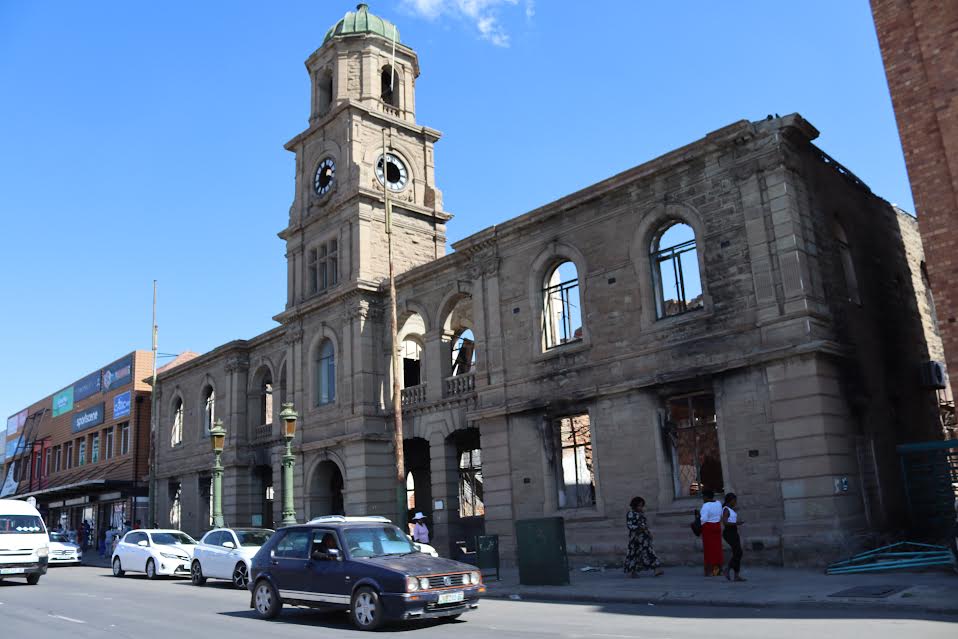
Another key heritage site is the Komani Town Hall, a sandstone building with its foundation laid in 1882. In 1897, a clock tower was added, creating one of the town’s most distinctive architectural features. The Town Hall has long been the focal point of municipal governance and civic life, hosting council meetings, public events, and cultural ceremonies. Its Victorian-style architecture, combined with local sandstone craftsmanship, makes it a prominent example of colonial civic architecture in the Eastern Cape.
Frontier Museum
The Frontier Museum is housed in a building that was originally constructed as a school during the late 19th century. Today, the museum preserves and displays Komani’s frontier history, including:
-
A reconstructed frontier settler’s cottage, illustrating the daily lives of early European settlers.
-
An historic locomotive, representing the significance of the railway in the town’s development.
-
The old Hexagon fountain, a symbol of civic pride and community gathering spaces.
Through its exhibits, the Frontier Museum provides visitors with a tangible connection to both the challenges and innovations of life on the Eastern Cape frontier.
Educational and Religious Architecture
Komani’s architectural heritage is further enriched by its educational and religious institutions:
-
Queen’s College, founded in the 19th century, is one of South Africa’s oldest boys’ schools. Its historic buildings and enduring traditions reflect the town’s longstanding commitment to education and intellectual development.
-
Churches from the Anglican, Methodist, and Dutch Reformed traditions stand as enduring symbols of religious diversity and colonial architectural style. Constructed from local sandstone, these buildings often feature Victorian and Gothic elements, serving both spiritual and community functions.
Cultural Significance
Together, these heritage sites showcase the interweaving of colonial, educational, and civic influences in Komani. They reflect the town’s transformation from a frontier outpost into a center of governance, learning, and culture. Beyond their historical value, these sites continue to serve as spaces for community engagement, cultural events, and tourism, bridging the town’s past and present.
Preservation Challenges
While many heritage sites are protected, some, like the Town Hall, have faced threats, such as the fire in 2022, highlighting the ongoing need for careful preservation and restoration efforts. Ensuring these landmarks endure is central to maintaining Komani’s historical identity and fostering community pride.
Name Change: From Queenstown to Komani (2016)
In 2016, the town historically known as Queenstown officially adopted the name Komani, reflecting a broader national effort to replace colonial-era place names with those grounded in indigenous heritage and local history. The new name derives from the Komani River, which flows near the town and is part of the Great Kei River system, symbolizing the natural and cultural landscape of the area.
Context and Rationale
The renaming was part of South Africa’s decolonization and heritage restoration initiatives, led by the South African Geographical Names Council under the Department of Arts and Culture. Across the country, many towns, streets, and landmarks with colonial names were reassessed to acknowledge African history, reclaim identity, and rectify historical erasures. In Komani’s case, the former name, Queenstown, honored Queen Victoria, representing the British imperial presence that shaped the town’s founding in 1853.
By adopting an indigenous name, the town sought to:
-
Restore a sense of local identity and cultural pride for the residents.
-
Recognize the historical and geographical significance of the Komani River.
-
Signal a symbolic break from colonial legacies embedded in place names and public spaces.
Public Reception
The decision to rename Queenstown as Komani was met with mixed reactions among residents and stakeholders:
-
Supporters welcomed the change as a long-overdue recognition of African heritage. Many saw it as an opportunity to instill pride, strengthen local identity, and align the town with broader national efforts to redress colonial naming practices.
-
Critics expressed concern about the practical implications of the renaming, including the costs of replacing road signage, updating official documents, and adjusting business records. Some also argued that the change could create confusion in administrative, postal, and commercial systems if not implemented efficiently.
Transition Period
Following the official renaming, both “Queenstown” and “Komani” were used interchangeably for several years. During this period:
-
Some government departments continued to reference Queenstown in official documents.
-
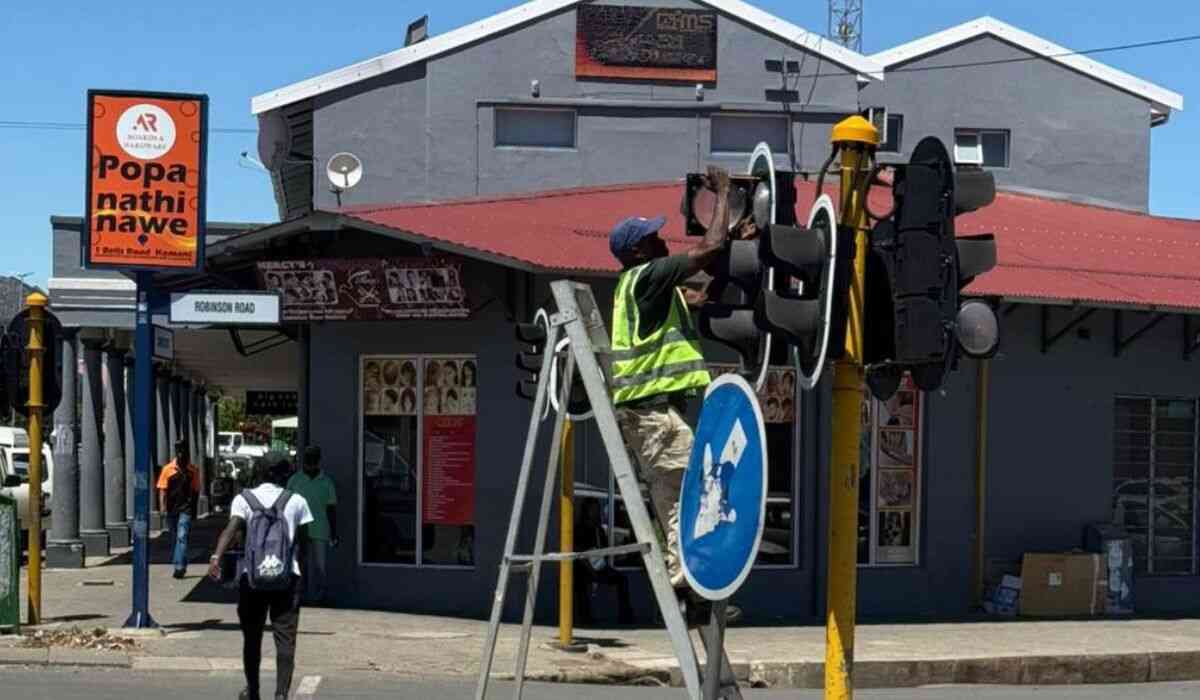
Businesses and residents had to update letterheads, signage, and marketing materials.
-
Maps and postal systems gradually incorporated the new name, requiring coordination across municipal, provincial, and national agencies.
Normalization and Current Status
Over time, the name Komani became widely accepted in media, signage, and administrative use, and it is now the standard designation for the town. Today, the renaming is generally regarded as a symbolic restoration of indigenous identity, linking the town’s future with its pre-colonial geographic and cultural roots.
Broader Significance
The transition from Queenstown to Komani highlights the complexities of renaming towns in South Africa: balancing heritage restoration with administrative practicality, managing public opinion, and ensuring continuity in civic, commercial, and social life. Komani’s experience serves as an illustrative case of how decolonization efforts intersect with community identity, governance, and urban history.
Recent Issues & Challenges (2010s–2020s)
Despite its rich history and cultural significance, Komani faces a range of socio-economic, infrastructural, and environmental challenges that have persisted into the 21st century. These issues highlight both the pressures on local governance and the town’s vulnerability to natural and man-made crises.
Service Delivery Failures
Komani has become emblematic of municipal dysfunction under the Enoch Mgijima Local Municipality, with residents experiencing repeated disruptions to essential services. Persistent problems include:
-
Electricity outages: Residents report frequent blackouts, sometimes lasting for days, due to aging infrastructure, open-circuit faults, and delayed maintenance. These power interruptions affect households, schools, businesses, and municipal operations.
-
Water shortages: Aging pipelines, insufficient maintenance, and occasional contamination have led to chronic disruptions in water supply. Some areas receive water intermittently, creating hardship for families and businesses.
-
Sewage and sanitation issues: Blocked sewers and leaking systems have caused spills into streets and residential areas, raising public health concerns and undermining hygiene standards.
-
Road infrastructure deterioration: Main streets and township roads suffer from potholes, crumbling surfaces, and failing streetlights, complicating transportation and posing safety risks.
These persistent service failures have led to community protests, social unrest, and growing frustration with municipal leadership. Residents frequently cite mismanagement, corruption, and slow response times as contributing factors.
Town Hall Fire (2022)
One of the most significant heritage losses in recent years was the fire at Komani’s historic Town Hall in November 2022.
-
The Town Hall, built in 1882 with a clock tower added in 1897, was not only a central administrative building but also a symbol of the town’s heritage and civic pride. Its destruction represented both a practical and cultural blow to the community.
-
The fire gutted the building, leaving much of the interior ruined while the sandstone exterior sustained partial damage. Preliminary reports suggested that electrical faults or negligence could have been contributing factors, though investigations were inconclusive.
-
By early 2024, the Town Hall had not been restored, despite public outcry. Residents expressed anger over the slow response, highlighting concerns that municipal neglect may be placing other heritage structures at risk.
-
The incident also sparked broader discussions about the preservation of historical sites, the municipality’s capacity for heritage management, and the prioritization of funds for restoration versus routine services.
The Town Hall fire remains a potent symbol of Komani’s ongoing struggle to protect its history while addressing pressing modern challenges.
The Future of Komani
Komani stands at a crossroads of history and opportunity, balancing its rich heritage with the pressing need for modernization, economic growth, and social equity. The town’s future will depend on addressing historical legacies, municipal challenges, and emerging opportunities in a rapidly changing South Africa.
Economic Development and Investment
Komani’s future growth hinges on diversifying its economy beyond agriculture and traditional commerce:
-
Agriculture modernization: While wheat, wool, and cattle farming remain central, there is potential to integrate agro-processing, sustainable farming, and high-value crops to create local jobs and stimulate investment.
-
Small business and entrepreneurship: Supporting SMEs, youth-led ventures, and informal sector initiatives could strengthen the town’s economic resilience and reduce reliance on municipal employment.
-
Tourism and heritage economy: The town’s Hexagon, Town Hall, Frontier Museum, Queen’s College, and historic churches provide a foundation for heritage and cultural tourism. Developing guided tours, heritage trails, and annual cultural festivals could attract regional and international visitors while generating revenue.
-
Renewable energy and local industries: With electricity outages posing a persistent problem, investments in solar energy, microgrids, and small-scale industrial development could reduce reliance on national power infrastructure and promote sustainable growth.
Urban Planning and Infrastructure
Addressing the legacy of apartheid-era spatial planning is key to Komani’s long-term viability:
-
Township integration: Investments in Ezibeleni and Mlungisi are essential to reduce socio-economic disparities, improve access to services, and foster inclusive growth. This includes upgraded roads, reliable electricity, potable water, and adequate sanitation.
-
Municipal modernization: Strengthening the capacity and accountability of the Enoch Mgijima Local Municipality is critical. Efficient urban management can ensure timely maintenance of roads, bridges, drainage systems, and public facilities, mitigating the effects of flooding and environmental stress.
-
Heritage preservation: The restoration of the Town Hall and protection of other historical buildings can serve dual purposes — safeguarding cultural identity and boosting tourism. Innovative approaches, such as public-private partnerships, could fund heritage projects while engaging local communities.
Social and Educational Development
Education, youth engagement, and social cohesion will shape Komani’s future:
-
Educational excellence: Schools such as Queen’s College provide models for improving academic outcomes across the region. Expanding access to quality education, literacy programs, and vocational training can equip residents for 21st-century job markets.
-
Community development: Strengthening local civil society, sports programs, and cultural initiatives can foster resilience, civic pride, and social inclusion, particularly in historically marginalized townships.
-
Public health and safety: Investments in clinics, flood response systems, and sanitation infrastructure are essential to improve quality of life and reduce vulnerability to environmental hazards.
Environmental Sustainability and Climate Resilience
Komani’s location along the Komani River makes it vulnerable to flooding, water scarcity, and climate variability:
-
Climate-adaptive infrastructure: Reinforcing bridges, roads, and drainage systems can reduce the impact of heavy rains and future floods.
-
River and watershed management: Protecting the Komani River through reforestation, erosion control, and sustainable water management will ensure long-term access to water for households, agriculture, and industry.
-
Renewable energy adoption: Solar, wind, and small-scale hydro projects could address energy insecurity while promoting sustainability.
Civic Engagement and Governance
The town’s trajectory depends heavily on transparent and accountable governance:
-
Encouraging citizen participation in municipal planning, budgeting, and heritage management can help align government priorities with community needs.
-
Addressing corruption and inefficiency will be essential to ensure services are delivered equitably and infrastructure investments yield lasting benefits.
-
Partnerships with provincial and national governments, NGOs, and private investors can provide technical expertise, funding, and oversight for long-term development projects.
Vision for Komani
The future of Komani envisions a balanced town that preserves its unique heritage while embracing innovation, social equity, and environmental resilience. Key pillars for this vision include:
-
Inclusive growth: Bridging the gaps between townships and the central town, reducing economic and social inequality.
-
Heritage-led tourism: Leveraging historical sites and cultural assets to generate revenue and civic pride.
-
Sustainable infrastructure: Building climate-resilient roads, drainage, and energy systems.
-
Educational advancement: Strengthening schools, vocational training, and lifelong learning opportunities.
-
Civic accountability: Ensuring local governance is transparent, responsive, and participatory.
If these strategies are pursued, Komani could emerge as a regional hub for culture, education, and commerce, demonstrating how a small Eastern Cape town can reconcile its colonial past with a vibrant, inclusive, and sustainable future.
Timeline of Komani
-
1853 – Town founded as Queenstown by Sir George Cathcart.
-
1855 – Granted municipal status.
-
1876–1880 – Railway connection to East London constructed.
-
1882 – Foundation of sandstone Town Hall; clock tower added in 1897.
-
1905–1908 – Bongolo Dam built.
-
1960s – Ezibeleni township established under apartheid spatial planning.
-
1980s – Mlungisi township central to political protests.
-
2016 – Official name change from Queenstown to Komani.
-
2022 – Historic Town Hall destroyed by fire.
-
2023–2024 – Ongoing service delivery crises, protests, and flooding events.
Komani’s story is one of resilience amid adversity. From its frontier origins to apartheid struggles, from proud heritage institutions to today’s challenges with governance and infrastructure, the town reflects the broader history of South Africa itself: a community navigating colonial legacies, striving for cultural reclamation, and demanding a better future.