Opinion
If partners can fund labs, why not fix broken schools first?

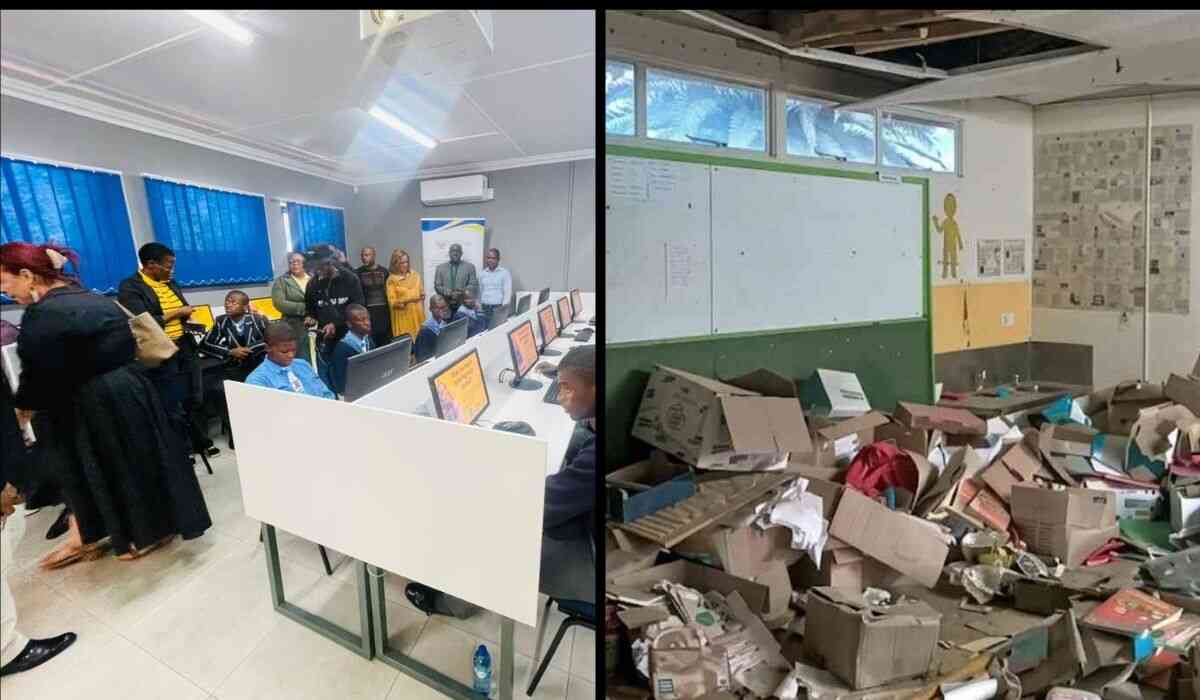
Across the Eastern Cape, schools are receiving new computer labs, multimedia centres, and digital learning equipment through partnerships with private organisations.
These projects are often presented as progress.
And in many ways, they are.
Learners gain access to technology.
Teachers receive training.
Schools move closer to a modern education system.
But as more of these handovers take place, a tougher question is beginning to surface:
If partners are willing to invest in schools, why not prioritise fixing the most basic problems first?
A province of uneven realities
Recent reporting has shown that some schools are still dealing with serious infrastructure challenges.
In some cases, safety concerns have led to closures.
In others, issues like broken windows, poor sanitation, and general neglect have disrupted learning.
These are not long-term development goals.
These are immediate needs.
At the same time, other schools are receiving fully equipped digital labs — complete with connectivity, support, and training.
The contrast is clear.
And for many communities, it raises uncomfortable questions.
The partnership argument
To be fair, these digital labs are often funded through partnerships, not directly from government infrastructure budgets.
That matters.
Private partners may choose to fund specific projects, such as technology, and those funds may not always be flexible.
But that does not fully settle the issue.
Because partnerships are not random.
They are coordinated.
They are agreed upon.
And they happen with the involvement of the department.
The key question: Who sets the priorities?
Even within partnerships, there is usually a conversation about what is needed and where support should go.
Which leads to a critical question:
Could these partnerships be directed toward more urgent needs in some cases?
For example:
- Repairing unsafe classrooms
- Fixing sanitation facilities
- Addressing structural damage
- Securing school premises
If a partner is willing to invest millions into a school, is it unreasonable to ask whether that investment could first ensure that learners are in a safe and functional environment?
Perception matters
For communities, the technical details of funding models are often less important than what they see.
And what they see is this:
One school receives modern computers. Another struggles with basic conditions.
Even if the funding comes from different sources, the outcome creates a sense of imbalance.
And that perception matters.
Because public trust in the education system depends not only on progress — but on fairness.
Not anti-technology — but pro-basics
This is not an argument against digital learning.
The province needs it.
But technology should build on a solid foundation — not sit on top of unresolved problems.
A learner in a safe, well-maintained classroom will benefit far more from digital tools than one in an environment that is already compromised.
A call for alignment
Partnerships between government and private organisations are valuable.
They should continue.
But there is an opportunity to align them more closely with the most urgent needs on the ground.
That may mean:
- Prioritising schools with the greatest challenges
- Combining infrastructure upgrades with digital investments
- Ensuring no school is left behind on basic standards
Conclusion
The expansion of digital labs in Eastern Cape schools is a positive development.
But it also highlights a deeper issue.
If resources — whether public or private — are available to support schools, the question is not only how they are used, but where they are used first.
Because before a school can be smart, it must first be safe.
And until that balance is clearly visible across all schools, the questions will remain.